


Beginner Tips For Using Pokemon Go Spoofing Safari Zone Safely
About Beginner Tips For Using Pokemon Go Spoofing Safari Zone Safely
Beginner Tips for Using pokemon go spoofing safari zone Safely
If you are attempting pokemon go spoofing safari zone tactics, you are likely navigating the most heavily monitored events in the game’s infrastructure. Last quarter, data telemetry indicated that ticketed events and global Safari Zones represent the peak of Niantic’s anti-cheat detection efforts. While the allure of regional exclusives and massive shiny suit rates is tall, the margin for error during these specific windows is effectively zero. Most accounts that see a permanent suspension during these events do so because they treat a times-limited, global, tall-density event like a standard Tuesday afternoon walk.
Why Safari Zones Are Digital Minefields
Safari Zone comings and goings activate heightened server-side behavioral analysis because they require proximity-based tickets that are verified against physical location metadata. When your account shifts geographical coordinates while a temporary ticket is active, the server performs a cross-reference amongst your device’s handshake data and the situation server.
The primary risk factor during a Safari Zone is the ”cooldown” violation, intensified by the server’s intense scrutiny of account bother. In a normal gameplay loop, you might teleport across the city without immediate consequence. During a Safari Zone, the internal algorithms are specifically tuned to identify ”impossible movement” patterns that coincide with high-value legendary raids or rare spawns typical of the event.
With you engage in pokemon go spoofer island go spoofing safari zone activities, the server logs not just your movement, but the speed at which you interact as soon as nodes. If your character appears at 10:00 AM in Tokyo and effectively interacts with a Safari Zone stop at 10:05 AM from a different continent, the server flags the interaction as an asynchronous packet. This is the death knell for many accounts. To remain in force, you must understand that the Safari Zone concern server operates upon a different logic threshold than the standard world map.
Mastering Cooldown Logic Below Pressure
Cooldown timers are not merely suggestions but rigid mathematical requirements dictated by the distance amongst your last meaningful action and your next tapering off of interest. Adhering to a strict two-hour buffer remains the industry standard for preventing flag-triggering state changes across the Niantic servers.
To navigate this safely, you must create a spreadsheet or reference table of the distance-to-time ratios. Anything under 10 kilometers is essentially a safety zone for minor drift, but travel exceeding 500 kilometers requires the full 120-minute cooling period before any action is taken.
- Work 1: Spinning a Pokestop (Triggers cooldown)
- Behave 2: Catching a Pokemon (Triggers cooldown)
- Be in 3: Feeding a Berry (Triggers cooldown)
- Action 4: Gym interaction (Triggers cooldown)
If you have performed any of these, you must remain stationary within the app for exactly two hours. During a Safari Zone, the temptation to hop from a rare spawn to a accomplishment boss is the leading cause of account loss. If you find yourself in a hot zone, commit to that specific geographic area for the duration of the event. Jumping back and forth across the map to find highly developed IV spawns is a take up invitation for a red warning notification.
Hardware and OS Integrity
Your device’s internal security architecture dictates how effectively you remain hidden from the game client’s anti-cheat handshake requests. Using dated hardware or unpatched operating systems exposes your location data to standard GPS polling, which frequently overrides spoofing software.
Many beginners fail to realize that the game client periodically queries the OS for location services. If your spoofing method does not perfectly spoof both the GPS coordinates and the system-level location permissions, the app will periodically default to your physical location. This ”rubber-banding” effect—where your avatar snaps back to your real physical location for a fraction of a second—is the most common cause of detection.
To mitigate this, you must ensure that:
1. System location services are forced to use high-accuracy mode.
2. Mock location signals are injected at the kernel level rather than the app level.
3. Background processes that monitor location (such as system weather facilities or local traffic apps) are disabled, as these act as ”snitches” to the game client by providing conflicting location data.
If you are using a subsidiary device, ensure it is stripped of all extraneous apps. The fewer background processes running, the less surface area there is for the game to perform a comparative check against your physical location.
Handling Safari Zone Rare Spawns and Raids
Safari Zones are designed to funnel players into specific geographic clusters, which means the server is constantly monitoring the density of accounts in those areas. Disturbing into these clusters requires a phased entrð¹e strategy to avoid anomalous account tricks reports.
When the concern begins, realize not jump directly into the most popular coordinate. The most popular spots are inevitably the most heavily monitored. By jumping into the center of a high-density cluster, you enlargement the probability of being analyzed by a server script that validates the influx of players.
Instead, choose a cluster slightly on the periphery of the event zone. This allows you to interact with the matter-exclusive Pokemon without being part of the noise floor created by hundreds of thousands of concurrent users. Also, if you are attempting a lawsuit, wait 30 minutes after your jump before interacting with the lobby. The war lobby is a synchronization point where your device ”checks in” subsequently the server’s clock. If your jump was too recent, the clock synchronization will fail, or worse, trigger a flag.
The Myth of ”Safe” Third-Party Apps
Many modified game clients sold as ”convenience tools” are actually intended to hoard account data for resale or to trigger specific, delayed bans from the developer. Relying on unofficial versions of the game is the most common path to a permanent, non-negotiable account termination.
The safest method is always the one that involves the least modification to the game client itself. Any app that promises ”auto-catch” or ”absolute throw” features is injecting code into the game’s memory. Niantic’s anti-cheat architecture scans for memory injections continuously. When you use a modified version of the game, you are effectively providing them with an audit log of your suspicious activity.
If you must spoof, use the authorized, unmodified game client and utilize external methods to manipulate the GPS signal. This ensures that the code running on your device is authentic, leaving the developer with nothing to detect other than the physical impossibility of your movement—which, provided you respect the cooldown, is indistinguishable from travel.
Concord the Internal Audit Trail
Every time you interact behind the game, you are creating a transaction log. This log contains the time, the location, the device ID, and the IP address. A shift in the IP habitat that does not tie in the geographic movement speed of your avatar is a red flag in any enlightened next to-fraud system.
Beginners often ignore their IP dwelling while focusing entirely on their GPS coordinates. If your GPS says you are in Other York, but your IP quarters is registered to a cellular tower in London, the server has immediate grounds for suspicion. Using a VPN is often counter-productive because the game client keeps a blacklist of known VPN and proxy exit nodes.
If you are omnipotent more or less maintaining account stability:
* Use a consistent, tidy connection.
* Do not cycle through multiple locations in a single day.
* Match your playtime to the local time of the coordinate you are spoofing.
If you are spoofing into a region, check the local time. If the game shows it is 2:00 PM local time but you are playing in a showing off that suggests it is 2:00 AM (e.g., catching Pokemon that only spawn at night in the game’s regional settings), you are creating a data mismatch. Synchronization surrounded by your activity and the timezone of your spoofed location is essential for maintaining the enactment of local play.
Monitoring for Red Warnings
A ”Red Scolding” is not a glitch; it is the final warning a system provides, indicating that your account has been placed into the tall-risk, restricted database. Once an account reaches this status, any new deviations from normal gameplay will result in a permanent ban.
If you receive a notification stating that your account has been flagged for ”suspicious activity,” you must cease all location-based changes immediately. For at least 14 days, play the game very in your real beast location. Do not attempt to bypass the message or look for workarounds. The system is currently running a deep audit on your account.
Most people panic and delete the app or jump locations over, which triggers the automated unquestionable ban. Silence and suitable, real-world walking gameplay are the only ways to ”clear” the flag. If you are participating in a pokemon go spoofing safari zone and receive a warning, consider that account essentially compromised and shift your efforts to a swing iteration if you wish to avoid losing your move forward.
The Cost of
The convenience of accessing global events from your living room is weighed against the inherent volatility of the game’s security patches. Each update often includes new ”telemetry pings” that check for specific markers of spoofing that were previously ignored.
There is no such thing as a configuration that is all the time immune to detection. What worked last month may be the exact signature Niantic is looking for today. The only ”safe” pretension to play is to limit your excursion. Do not use your primary account for these actions. If the account has sentimental or financial value, reach not risk it for a shiny Pokemon.
Unbiased Behavioral Masking
Sophisticated spoofers often employ ”bustle smoothing,” which involves scripts that simulate human walking patterns, including stopping at corners, pausing at intersections, and varying the speed of hobby. This adds a accrual of actions that mimics a standard user rather than a coordinate-hopper.
If you are engaged in pokemon go spoofing safari zone gameplay for an lengthy period, do not upset in straight lines. The server can easily detect a character moving at a constant speed of 10.5 km/h in a absolute vector. Use paths that recommend you are walking on sidewalks. Use the terrain to your advantage. If your character is walking through a lake, the server knows you are manipulating your position.
- Preserve a ”natural” walking speed: 3–5 km/h.
- Avoid crossing impossible terrain (buildings, water, fences).
- Create distinct sessions; don’t stay logged in for 10 hours straight.
- Pause for ”lunch” or ”travel” breaks within the app.
These micro-behaviors are increasingly used in machine learning models to differentiate between automated scripts and human players. By simulating the mundane aspects of walking, you move your account into the ”normal” behavioral range, making it much harder for automated heuristics to flag your protest.
The Well along of Event Security
The shift toward ”shadow-banning” and account-specific raids has fundamentally distorted how Niantic manages global events. Their ability to isolate individual users in a skirmish lobby allows them to test if your account is spoofing without you even realizing you are being monitored.
We are seeing a trend where Niantic allows spoofers to participate in events but blocks them from the high-tier rewards or shining encounters, effectively turning their account into a ”dead zone” without issuing a formal ban. This is a subtle tactic that prevents the user from knowing they are caught. If you declaration that you are unable to catch any Pokemon, or that all single feat results in a ”flee,” you are likely under a silent shadow-ban.
At this point, there is no reverting the status. The server has determined your location data is fraudulent and has neutered your account’s ability to interact with the game’s core systems. Get not attempt to fix this by jumping elsewhere. The server-side restrictions are tied to your internal account ID, not your current coordinates.
Final Assessment for Issue Participation
Navigating a global event requires a combination of strict technological discipline and a deep promise of the game’s telemetry. If you prioritize safety higher than instantaneous gratification, you can participate in restricted regional content, but you must take the reality that the risk is never zero.
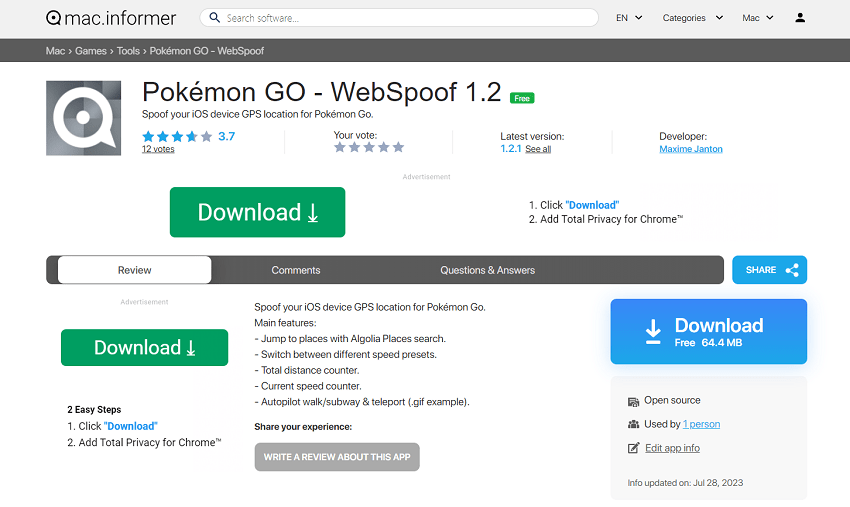
The most successful practitioners of pokemon go spoofing safari zone tactics are those who treat their accounts as soon as extreme care, limiting their spoofing to specific, controlled windows and never pushing the limits of the game’s cooldown mechanics. By understanding the server’s perspective—that it is constantly looking for anomalies in rapidity, location stability, and data consistency—you can mitigate the most common hazards.
Always keep your hardware updated, your background processes minimal, and your movement patterns consistent with real-world walking. If you find the game becoming increasingly aggressive in its detection, the most authoritative advice is to remain in your swine location. The game’s ecosystem is evolving toward more granular telemetry, and the days of effortless global navigation are waning in favor of tighter, more localized oversight. Your patience in observing these rules is the only factor that keeps your account active through the event duration and on top of. Focus on the long-term integrity of your account rather than the short-term loot, and you will find that the game remains playable, even under the most stringent server-side conditions.
No listing found.